
The Titanic Legacy
Undiscovered Places >> Canada>>North America>> The Titanic Legacy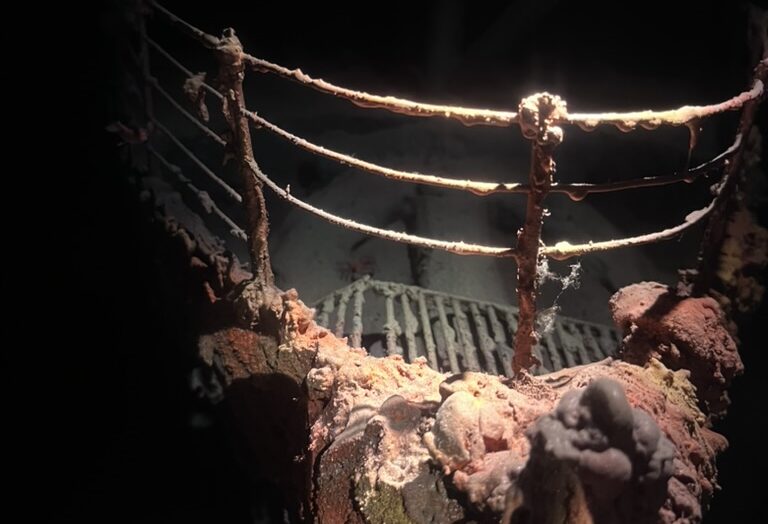
The Titanic Legacy
Canada’s East coast has an indelible connection with the Titanic tragedy. When the RMS Titanic sinking occurred on April 15, 1912, the nearest major port with the resources to respond was Halifax, Nova Scotia. Halifax became the centre of the recovery effort. Cable ships based there—including the CS Mackay-Bennett, the CS Minia, and others—were dispatched to recover victims from the disaster site. Hundreds of bodies were brought back to Halifax, where many were identified and returned to their families, while others were buried locally.

A sombre link to the tragedy
Today, more than 100 Titanic victims are buried in Halifax’s cemeteries, including Fairview Lawn Cemetery, which contains the largest collection of Titanic graves in the world. Although Titanic was bound for New York, Halifax became the principal centre for recovering and identifying the dead. Three Canadian vessels were involved in the recovery: the cable ship CS Mackay-Bennett, followed by Minia, Montmagny and Algerine.
After the bodies were brought back to Halifax, a temporary morgue was established. Families were given the opportunity to have identified victims sent elsewhere, but those who were unidentified, unclaimed, or whose families requested burial in Halifax were buried locally.
The Fairview graves are particularly striking. They are arranged in rows along a gently sloping section of the cemetery. The arrangement was designed by surveyor E. W. Christie, and the curved rows have often been noted as resembling the bow of a ship. Most of the graves have simple, almost identical granite markers. They bear the victim’s name, where known, and “Died April 15, 1912.” Many also have a number corresponding to the number assigned to the body when it was recovered.
There is something especially moving about the numbered stones. They represent people who, in many cases, could not be identified even after their bodies had been brought ashore.

There is something rather extraordinary about Fairview Lawn because it isn’t a museum or a reconstructed memorial. It remains an ordinary working cemetery, and the Titanic graves sit among the graves of generations of Halifax residents.
The Museum of the Atlantic
Halifax is also home to the Maritime Museum of the Atlantic, which houses one of the world’s most significant collections of Titanic artifacts. Unlike many Titanic exhibitions, its objects are not primarily recovered from the wreck itself following its discovery at the bottom of the Atlantic. They are largely pieces of Titanic that floated to the surface after the sinking and were recovered by the Halifax vessels sent to search for the dead.
The deckchair, pictured above, is particularly interesting because it gives you a physical sense of the ship’s size and luxury. The museum has a reproduction that you can actually sit in, while the historic chair itself is preserved behind glass as an artefact.
The deck chair also has an intriguing connection with the 1997 film. James Cameron visited the museum’s collection while making Titanic, and the museum’s artefacts helped inform some of the film’s historically accurate reproductions. The museum’s permanent Titanic exhibition is still on display, and contains more than 50 objects and historic photographs.
The radio connection
North of Nova Scotia is Prince Edward Island. The connection here with the tragedy is less strong; PEI was not involved in the recovery operations, and no major Titanic-related events occurred there. However, there is one place that has a strong link. The connection between Cape Bear Lighthouse and the Titanic is one of the most fascinating chapters in Prince Edward Island’s maritime history.
Located on the southeastern tip of Prince Edward Island, Cape Bear Lighthouse stood near a wireless telegraph station operated by the pioneering inventor Guglielmo Marconi’s company. In 1912, wireless communication was still a relatively new technology, and the Cape Bear station was part of a growing network that allowed ships and shore stations to exchange messages across great distances.
The station’s principal purpose was rather mundane: it provided wireless communication with government icebreakers operating between Prince Edward Island and Nova Scotia. The station remained in operation until 1922.

Receiving the Titanic’s Distress Signals
On the fateful night, the Titanic’s wireless operators, Jack Phillips and Harold Bride, began transmitting distress calls.
The Marconi station at Cape Bear was the first land station to receive fragments of these emergency messages. The operator on duty, Thomas Bartlett, reportedly heard the urgent signals and recognised that something serious had occurred. Because radio reception conditions varied and messages were weak, he initially received only portions of the transmissions, but they were enough to indicate that Titanic was in distress.
Through the headphones, came the Morse code from a vessel hundreds of kilometres away: “CQD … MGY …” and then the position and requests for assistance. CQD was the Marconi code for a distress signal and MGY was the Titanic’s call sign. The operators also used what was then a new code – “SOS”.
What makes the story extraordinary is that Bartlett wasn’t expecting anything remotely like the message that came through his headphones that night. He had the good sense to relay it by landline to Charlottetown. From there it could be passed into the wider Canadian communications network.
These signals were then relayed through the wider Marconi communications network, helping spread news of the unfolding disaster. Cape Bear therefore became one of the first places in Canada to receive direct communication connected to the sinking.
The Importance of Wireless Technology
The Titanic disaster demonstrated both the promise and the limitations of early wireless communication. For the first time in a major maritime disaster, distress messages could be sent over long distances to ships and shore stations. The messages received at Cape Bear and other stations helped coordinate rescue efforts and informed the world about the tragedy as it unfolded.
The disaster also led to significant changes in maritime safety regulations, including requirements for continuous radio watches aboard passenger ships and improved emergency communication procedures.Today, the lighthouse and former wireless station site are preserved as part of the Cape Bear Lighthouse and Marconi Museum.
Getting There
The Titanic artefacts are in the Halifax Maritime Museum of the Atlantic (including the model of the Titanic wreck pictured at the top of this article). The address is 1675 Lower Water Street, Halifax, Nova Scotia, B3J 1S3. The museum sits directly on the Halifax Waterfront Boardwalk, making it easy to find. Fairview Lawn cemetery is less easy to find, but well worth the effort. It is located in Halifax’s North End at the northern end of Windsor Street. The Titanic graves are on a gentle hillside, signposted once you’re in the cemetery.

Cape Bear is best visited by car. The lighthouse is about 25 km from the Wood Islands ferry terminal, at Black Brook Road in Murray Harbour, There’s a short dirt road to a small car park, which is easily missed, so be on the lookout.

Related Post

The World of Green Gables
Anyone who has ever read the L M Montgomery classic, Anne of Green Gables will…