Hanoi’s hidden citadel
Undiscovered Places >> Asia>> Hanoi’s hidden citadel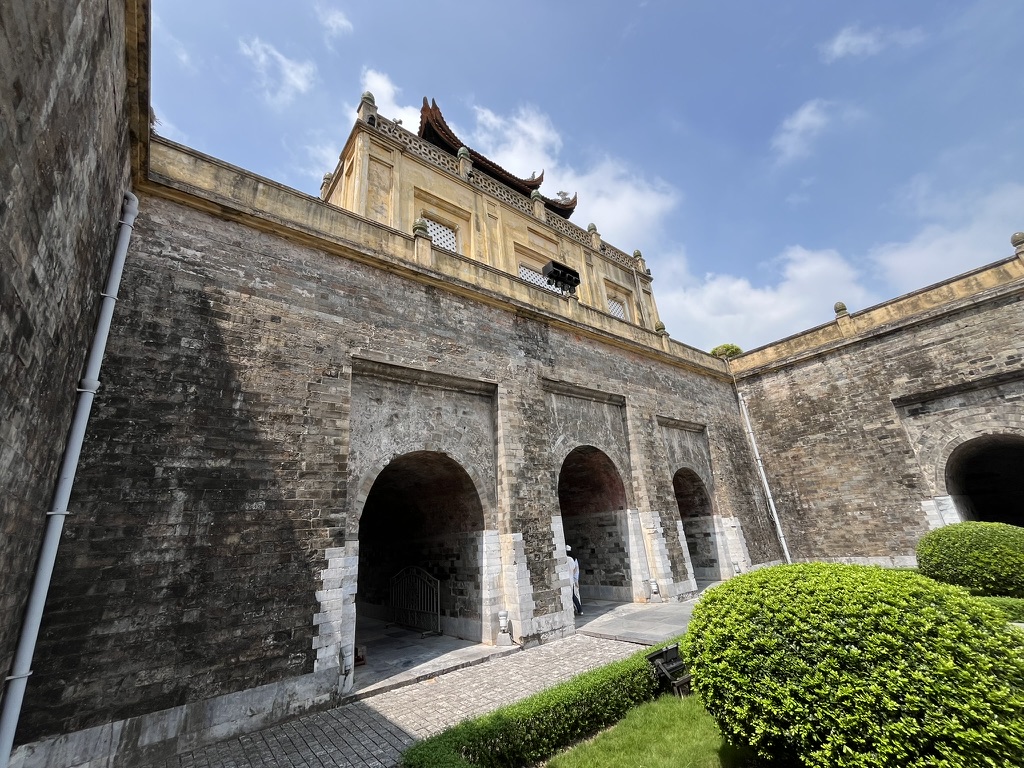
Hanoi’s hidden citadel
It’s not actually hidden, of course – but for some reason the Hanoi Citadel seems to have been missed out of many of the tourist itineraries. It’s one of Vietnam’s UNESCO World Heritage Sites and one of Vietnam’s most historically significant landmarks, and officially known as the Imperial Citadel of Thăng Long.
It served as the political and military centre of the country for over a millennium, from the 11th century (Lý Dynasty) through to the Nguyễn Dynasty and into the French colonial era. And following World War 2 and the exit of Japan from Vietnam, when Ho Chi Minh stepped into the power vacuum that was left, it became the key military headquarters during the Indochina and Vietnam Wars, with a command bunker still preserved underground.

The citadel was built on the remains of an earlier Chinese fortress and expanded over time, especially during the Lý, Trần, and Lê dynasties. It includes relics from different historical periods, such as ancient palaces, temples, wells, and military bunkers.

The French Connection
There’s a lot of archaeological excavation underway as a lot of the Citadel had been knocked down by the French colonial powers. When France fully colonized northern Vietnam in the 1880s, they sought to impose control over Vietnamese political structures. The Imperial Citadel, as the centre of royal and administrative power under various Vietnamese dynasties, was seen as a symbol of native sovereignty and resistance, and a prime location for military and administrative command. To neutralise its symbolic and strategic power, the French demolished many of its ancient structures, including large sections of palaces, temples, and gates.

But what is left is fascinating and it obviously means a lot to Vietnamese people. Here, they can (and do) hire traditional Vietnamese dress to have their photos taken against a traditional backdrop. It is, in a sense, a physical symbol of the continuity of Vietnam as an independent nation. The citadel’s initial construction in 1010 embodies when Vietnamese civilisation was establishing itself politically and culturally. The site was a centre of political power for almost thirteen centuries, with successive layers of occupation and rebuilding. UNESCO describes the archaeological evidence as demonstrating a remarkable continuity of political power and cultural development.
The citadel also represents the Vietnamese ability to absorb outside influences without losing its identity. This is another reason the site is important. Vietnamese civilisation was profoundly influenced by China — particularly Confucianism, administrative systems, architecture and writing. But Vietnam was never simply a copy of China. The site demonstrates this mixture. UNESCO describes it as being at a cultural crossroads between Chinese influences to the north and Champa to the south, with the Vietnamese adapting those influences into their own distinctive culture.

The Vietnam War
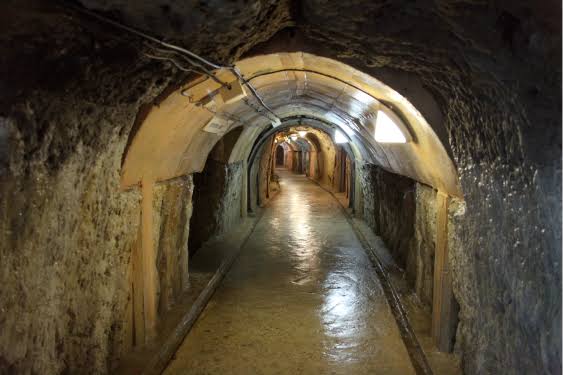
The Vietnam War (or American War, as it’s called in Vietnam) connection is one of the most fascinating aspects of the Hanoi citadel, because the site that had been the seat of Vietnamese emperors for centuries became, in the 1960s and early 1970s, the nerve centre of North Vietnam’s military command. Particularly fascinating are the military bunkers, especially the D67 Command Bunker, which are some of the most fascinating and historically significant remnants from Vietnam’s modern history. We explored both the above-ground D67 House and the underground bunker system, which remain well-preserved and restored.
The D67 House was constructed in 1967, specifically to provide a secure headquarters for the senior North Vietnamese military leadership. From outside it looks surprisingly unremarkable — a low, rectangular building rather than an imposing military headquarters. But it was designed for war. The walls are approximately 60 cm thick, the building was soundproofed, and the roof had a layer of sand intended to provide protection against bomb fragments. There were heavy steel doors and connections to the underground bunker system. This wasn’t simply an air-raid shelter for people to hide in during bombing. It was intended to allow the military leadership to continue commanding the war while Hanoi was under attack. The bunker included communications facilities and command rooms.

The interior is kept as it was during the war, offering a sense of what decision-making at the highest levels of the Vietnamese military looked like under constant threat from American air raids.

It’s an incredibly important historical site—but it’s often overlooked on tourist itineraries. There may be a few key reasons for this: While it’s a UNESCO World Heritage Site, it doesn’t have the international fame of sites like Ha Long Bay or Hoi An and consequently visitors to Hanoi tend to focus on headline attractions like the Old Quarter, and may not realise how significant the citadel is. It certainly seems to explain why we were the only non-Vietnamese people we saw there!
Getting there
The Imperial Citadel of Thang Long is centrally located in Hanoi, at 19C, Hoang Dieu Street, Ba Dinh District. It’s in an area with a number of other famous landmarks such as Ho Chi Minh Mausoleum, One Pillar Pagoda, and the Vietnam Military History Museum. Opening hours are 8am to 5pm, and it costs 100,000 VND per person, which applies for both locals and foreigners.
Walking: It’s about a half hour walk from the Old Quarter of Hanoi (but feels longer if it’s a hot day!)
Car: You can take a trip with the ubiquitous ride-hailing service Grab, a taxi or motorbike.
Public transport: Bus route 22A stops outside the gate and you can pick it up from Hoang Dieu Street, Phan Dinh Phung Street, the Bac Son monument, General Vo Nguyen Giap’s house, and Lenin Park.

Related Post
A Colourful Underground Adventure
If you’ve ever seen photos of Yangshuo, China, you’ve undoubtedly seen the iconic, mist-shrouded karst…