In Dylan Thomas’ Footsteps
Undiscovered Places >> Europe>> In Dylan Thomas’ Footsteps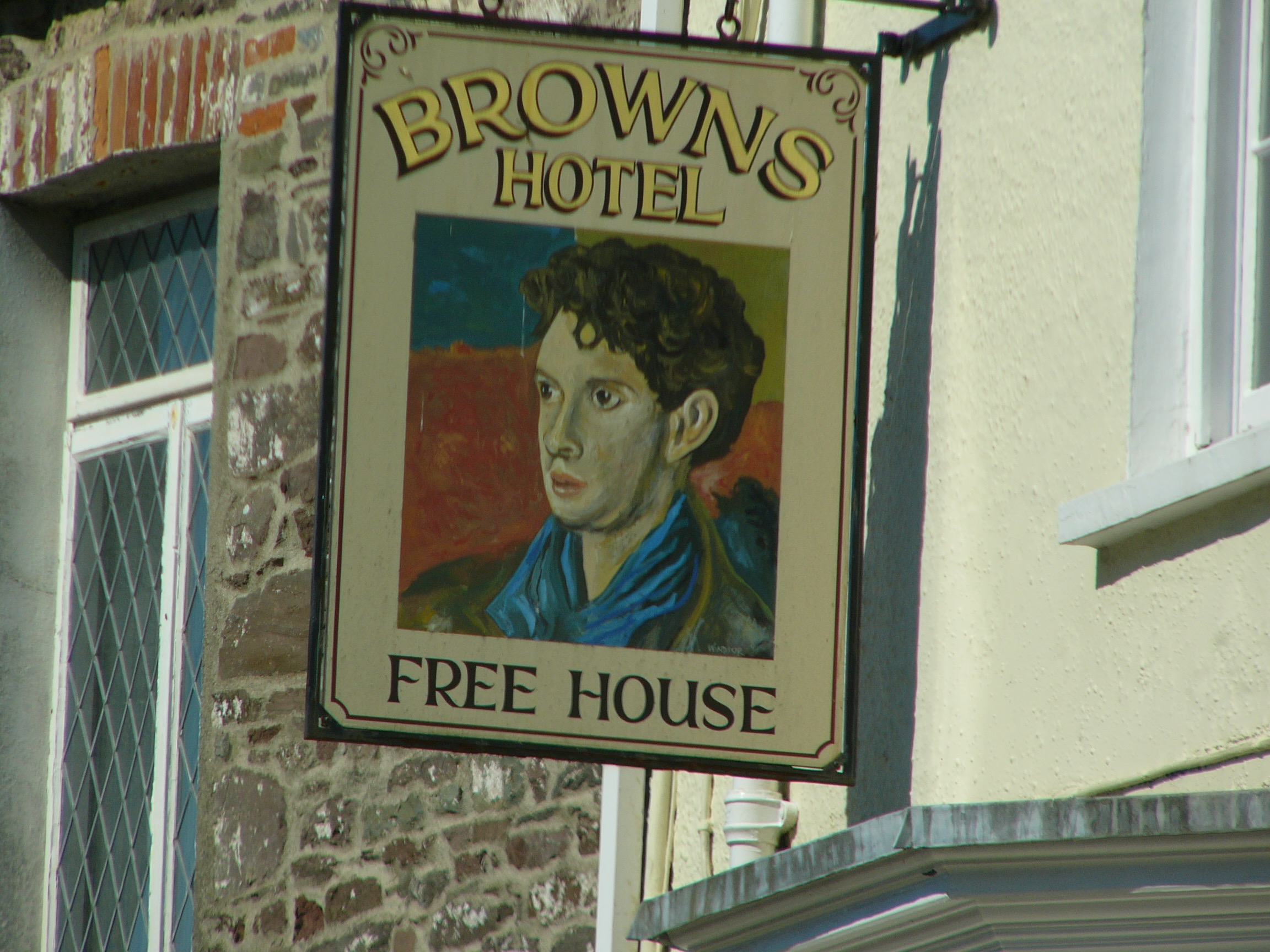
In Dylan Thomas’ Footsteps
Anyone growing up in Britain in the 60s or 70s will remember the sonorous tones of Richard Burton reciting the opening lines of Dylan Thomas’ “Under Milk Wood”:
It is spring, moonless night in the small town, starless and bible-black, the cobblestreets silent and the hunched, courters’-and-rabbits’ wood limping invisible down to the sloeblack, slow, black, crowblack, fishingboatbobbing sea.

It was a set text for many school children, and we all got to listen to that recording. Originally written for BBC radio as a ‘play for voices’, it invites the audience to listen to the dreams and innermost thoughts of the inhabitants of the fictional small Welsh fishing town, Llareggub (which of course is ‘bugger all’ backwards).
Thomas was one of the most distinctive English-language poets of the 20th century and one of the most mythologised. He was Welsh, intensely Welsh in his sense of place, but he wrote in English and became an international literary celebrity.
Thomas was born in Swansea on 27 October 1914 and spent his childhood there. His father, D. J. Thomas, was an English teacher, and Dylan inherited his love of literature and language from him. He was an unusually precocious writer. He left school at 16 and worked briefly as a journalist, but by his late teens he was already writing poems of remarkable sophistication. About two-thirds of his poetry was written during his years in Swansea.
Thomas wasn’t primarily interested in telling a straightforward story. He was fascinated by the sound of words and by the multiple meanings that words could produce when put together in unexpected ways.
A home in Laugharne
In May 1938, the Thomas family moved to Laugharne, a small town on the estuary of the river Tâf in Carmarthenshhire in South Wales. They lived there intermittently for just under two years until July 1941, but did not return to live there until 1949. Laugharne is believed to have been the inspiration for “Under Milk Wood”. He once famously described the town as “a timeless, mild, beguiling island of a town”.

The river winds down to the sea, past Laugharne Castle and the village lanes wind around gentle hills. Pretty cottages tumble together, and the waters of the estuary withdraw across a wide sandy shore.
On the shore you’ll find a small boathouse where they now serve teas. This is was Dylan’s home for the last years before his untimely death in New York in 1953. It offers lovely views across the Tâf estuary but it was in a small shed above the boathouse where Dylan wrote. It’s been preserved in his memory and it looks today as if he’s just popped out for a moment (probably to the pub!)

Browns Hotel (see the picture at the top) in the town was the favourite watering hole of poet Dylan Thomas, who famously left the bar’s phone number as his own. Today it’s a boutique hotel including Dexter’s Steak House and Grill, who run the bar and the restaurant.

Laugharne has long been a haunt of artists – and today photographers enjoy the views as well. Wander down the lanes, follow some of the paths around the town. The Wales Coastal Path runs through the town, and you can follow Dylan’s Birthday Walk, a 2.75km stroll around the town, taking in the lane where you’ll see Dylan’s shed, and many other points of interest. It follows the route Dylan Thomas took on 27 October 1944 — his 30th birthday — and which inspired his remarkable poem Poem in October. The poem starts with Thomas looking back on his life and then becomes increasingly absorbed in the landscape around him — the rain, birds, trees, hills and estuary. The wonderful thing about the Birthday Walk is that you can stand in essentially the same landscape while reading the poem.
Look out for the poetry panels, one of the nicest features. There are four panels with verses from Poem in October, each accompanied by a bench. They’re positioned so that you can read the relevant part of the poem while looking at the landscape that inspired it. To really enjoy the experience, don’t just photograph the view – sit down and read each passage slowly.
Getting there

Fans of TV thrillers may recognise Laugharne as the home of the thriller TV series Keeping Faith. Faith is a Welsh lawyer whose life is turned upside down after her husband disappears and she is suspected of it.
If you want to visit Laugharne, it’s only an hour from Swansea by car. Take the A4066 off the A40 at St Clears. It is approximately 4 miles from the A40. You can also catch bus number 222 from St. Clears.
Related Post
The Garden on the Ramparts
Most visitors to Prague's famous and beautiful castle enjoy the historic building and its links…