
Ticket to Rye – the medieval jewel on the Sussex coast
Undiscovered Places >> Europe>> Ticket to Rye – the medieval jewel on the Sussex coast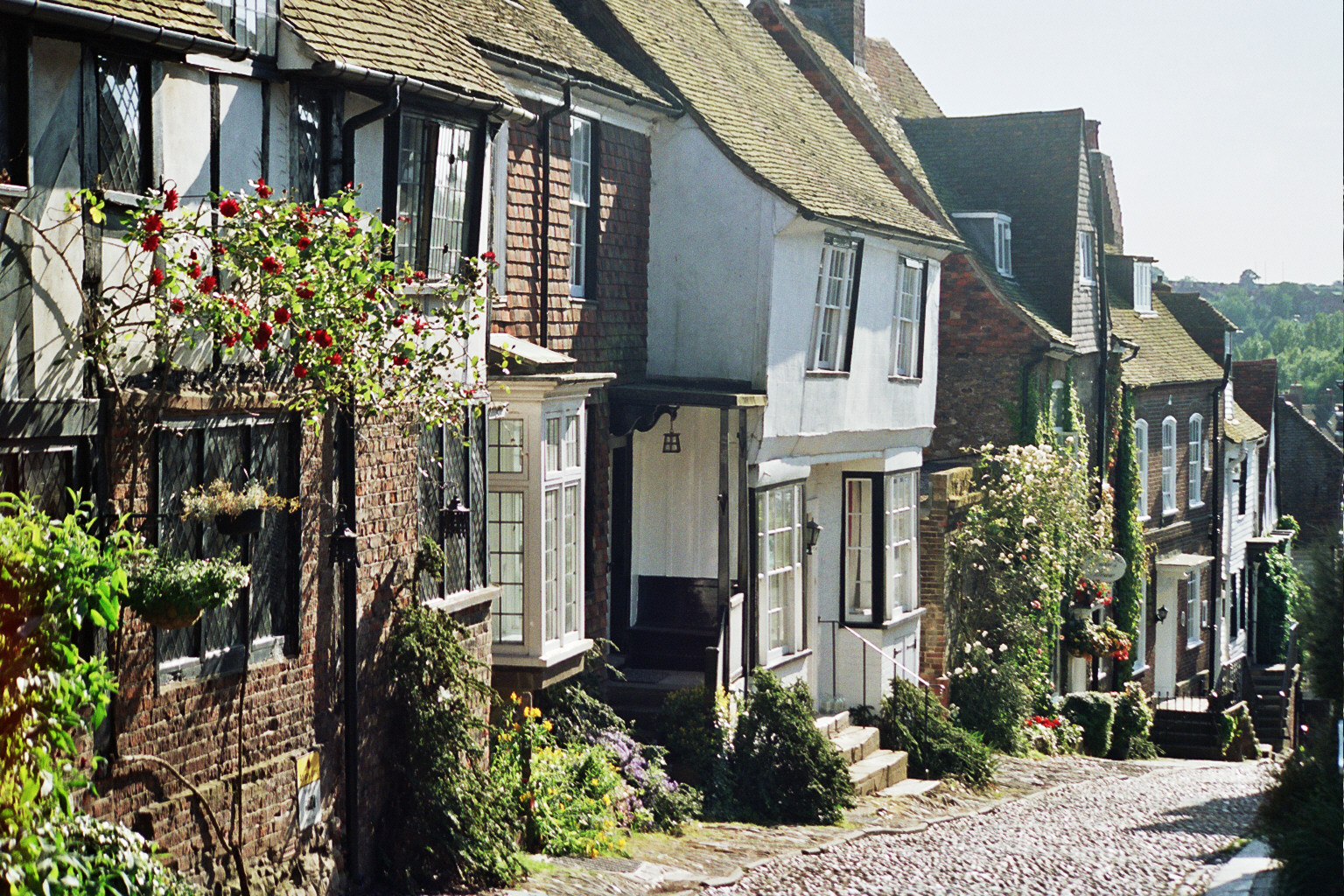
Ticket to Rye – the medieval jewel on the Sussex coast
England’s south coast used to be a popular holiday destination for Brits before the advent of cheap holidays to the Mediterranean sun spots. It fell from favour, with people seeing it as a holiday destination for retirees (and did Torquay ever recover from Fawlty Towers failing to deliver herds of majestic wildebeest or the hanging gardens of Babylon?). But the complications of Brexit, and the rising cost of living have seen a resurgence. The popular destinations remain the seaside resorts – Eastbourne, Brighton, Hastings, etc – but Rye tends to get forgotten. It used to be beside the sea – but the vagaries of coastal dynamics has seen the coastline move three kilometres away from Rye. But Rye’s town centre is an undiscovered – or more accurately, forgotten – historic jewel.

Rye is a place for walking. Narrow cobbled streets, medieval buildings, an ancient church – plenty to see and enjoy.
If you see only one street in Rye, make it Mermaid Street. It is one of those streets that looks almost impossibly picturesque: steep cobbles, timber-framed houses, crooked roofs and old buildings leaning towards one another. The famous Mermaid Inn is here, dating in part to the 15th century, although the present building incorporates much older fabric. This was the haunt of the Hawkhurst Gang of smugglers who were eventually hung for their crimes in the 1500s. Don’t just photograph the street. Walk right down to the bottom and then turn around and look back uphill. That’s where you get the classic view of the cobbles and timber-framed buildings.
St Mary’s Church sits at the heart of the old town and is one of Rye’s most important landmarks. The church dates largely from the 12th–15th centuries, and its tower is particularly interesting. If you’re able to climb it, do it. The view from the top is one of the best ways to understand Rye’s extraordinary geography. You can see the rooftops of the old town, the surrounding marshes and the countryside stretching towards the coast. Inside, look for the 18th-century clock, whose mechanism is still associated with the church’s famous clock tower.
History
Rye has a significant history – it was an important member of the mediaeval Cinque Ports confederation, and at the time was almost entirely surrounded by the sea. Historians believe its importance as a port goes back to Roman times.
By the 12th century, as Cinque Ports, Rye and neighbouring Winchelsea received privileges in return for providing ships and sailors to the Crown. This is the foundation of Rye’s medieval importance: it wasn’t just a market town; it was part of England’s naval defence system. In 1247, King Henry III reclaimed Rye from the Norman Abbey of Fécamp and ordered the construction of a castle to defend the town. The surviving Ypres Tower is the great reminder of this period.
One of the most important events to understand when visiting Rye is a series of enormous storms, particularly around 1287, radically altered the coastline. The River Rother changed course, harbours silted up and the sea gradually retreated from the town.
Rye had effectively been a maritime town surrounded by water on several sides – and then the sea left. Over subsequent centuries, marshland accumulated around it. This is why one of the strangest things about Rye today is that its old medieval centre looks like a seaside town – but the sea is now roughly two miles away.
The single most dramatic event in Rye’s history took place in 1377, a French fleet under Jean de Vienne raided the south coast. Rye was attacked, looted and largely burned. St Mary’s Church was damaged and its bells were carried away to Normandy. The attack was devastating. But there’s a wonderful revenge story attached to it. Rye and Winchelsea sailors later mounted a raid on Normandy and recovered the bells. One of them is still associated with St Mary’s Church today.
The key to appreciating the town is to remember that the Rye you see today isn’t quite the Rye that existed in the Middle Ages. The town once stood at the head of a large tidal inlet. Ships could come much closer to the town. Over several centuries, the sea retreated and the harbour silted up, leaving Rye stranded several miles inland. So when you stand at the top of St Mary’s tower and look across the apparently endless marshes, you’re looking at what was once a major maritime landscape. That, combined with its Cinque Port history, French attacks, medieval walls, smuggling traditions and later literary connections, makes Rye considerably more interesting than its reputation as merely a pretty Sussex town suggests.

The surrounding area
If you decide to visit, Rye is an excellent base for exploring the eastern end of Sussex and the Kent border. If you’re interested in history, old towns, castles, gardens and unusual landscapes, you could easily spend 4–5 days based in Rye without running out of things to see.
Bodiam Castle is one of Britain’s most spectacular medieval castles. Camber Castle is Henry VIII’s extraordinary artillery fort in the marshes, and nearby is Camber Sands (which has stood in as the Arabian desert on any number of cheap TV shows). Battle is traditionally the site of the Battle of Hastings in 1066. And for a really unique place, visit Dungeness to see its strange shingle landscape, lighthouses and nuclear power station.
There is an Arts Festival in Rye in September, and the town has a history of connection with the artistic world, including writers like Henry James, E F Benson and Joseph Conrad.
Getting there
Rye is on the A259, which runs along the coast. There’s no major route from London, but you can get join the A259 iby travelling down to Hastings on the A21, or on the A2070 from Ashford have travelled down the M20.
You can get there by train from Victoria Station, changing once.

Related Post
The Garden on the Ramparts
Most visitors to Prague's famous and beautiful castle enjoy the historic building and its links…