Bavaria at Its Most Beautiful
Undiscovered Places >> Europe>> Bavaria at Its Most Beautiful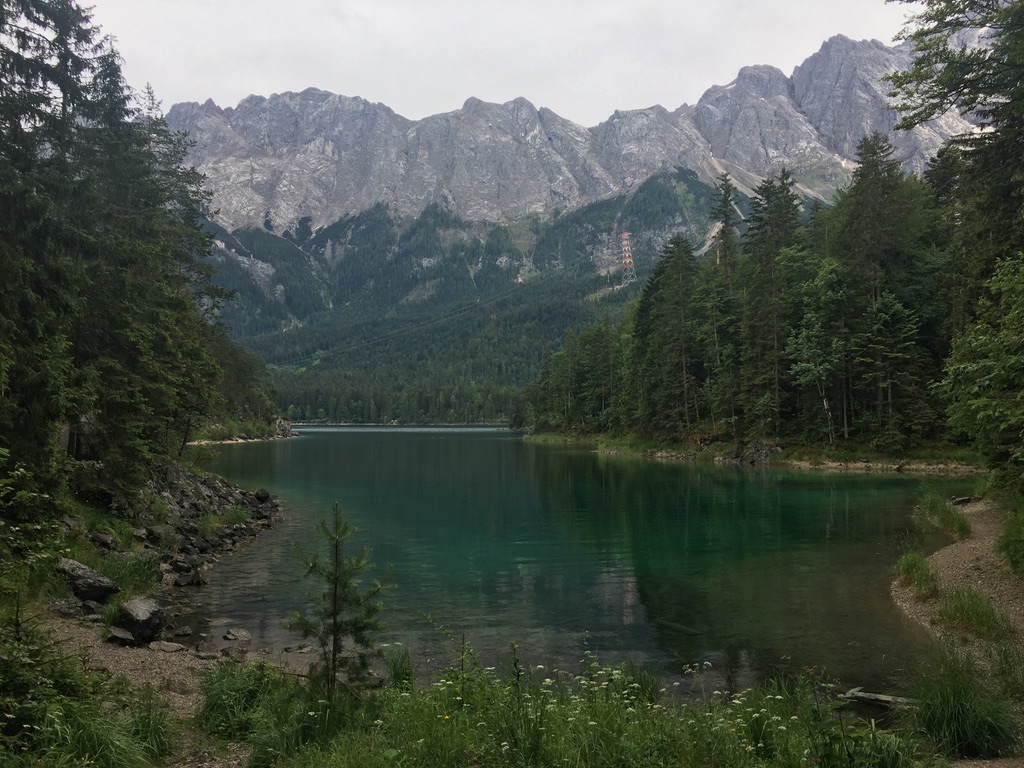
Bavaria at Its Most Beautiful
When you think of Bavaria, many would think about Munich’s Oktoberfest, the world’s largest Volksfest with massive, one-liter glass mugs (Maß) filled with golden Helles beer, bustling beer gardens shaded by chestnut trees, and giant, salty pretzels (Brezn). Other might associate Bavaria with modern luxury and cutting-edge industry. It is the birthplace and global headquarters of BMW (which literally stands for Bayerische Motoren Werke or Bavarian Motor Works) and Audi, as well as sports giants like Adidas.
But if there is one place that captures the very essence of the Bavarian Alps, it is Garmisch-Partenkirchen. Nestled beneath Germany’s highest mountain, the mighty Zugspitze, this charming town combines breathtaking alpine scenery with centuries of history, traditional architecture and outdoor adventure. In the winter, it’s a major skiing destination – but we think it’s worth visiting in the warmth of summer. Garmisch-Partenkirchen is one of those destinations that leaves a lasting impression.

A town with two names
The town itself has a fascinating story. Until 1935, Garmisch and Partenkirchen were two separate communities. The two towns, separated only by a railway line and a river, intensely disliked each other. They competed fiercely for business, and for generations, the locals even heavily discouraged mixed marriages between residents of the two sides.The forced marriage of the two towns happened in 1935. Germany had been selected to host both the Summer Games (Berlin) and the Winter Games of 1936. The International Olympic Committee (IOC) pointed out that neither Garmisch nor Partenkirchen individually had enough hotel rooms, infrastructure, or capacity to host an international event of that scale.

The IOC threatened to strip Germany of the Winter Games and move them elsewhere. Seeing the Olympics as a massive propaganda opportunity for the Nazi regime, Adolf Hitler took matters into his own hands. On January 1, 1935, Hitler simply signed a decree forcing the two independent municipalities to combine into a single, larger town: Garmisch-Partenkirchen. The mayors who opposed the merger were swiftly removed from office.
A colourful community
Walking through the streets is like stepping into a picture postcard. Colourful houses are decorated with Lüftlmalerei—beautiful painted frescoes depicting religious scenes, local legends and everyday life. Window boxes overflow with bright flowers during the warmer months, while church spires rise above red-tiled roofs against a backdrop of mighty peaks.
Wander down Ludwigstrasse on the Partenkirchen side of the town, and you get a real sense of the town’s history. Incidentally, you can pick up a great meal, too. We stopped at the Gasthof zum Rassen and had a fantastic evening meal, sitting in the cool of the evening, surrounded by what is surely one of the prettiest streets in Germany. We weren’t staying here but you can still order a meal. There are plenty of other choices along the way, too.

One of the pleasures of Garmisch-Partenkirchen is simply wandering without any particular destination. Small cafés spill onto quiet streets, family-run bakeries tempt visitors with fresh pretzels and pastries, and traditional inns serve hearty Bavarian meals accompanied by locally brewed beer. The atmosphere is relaxed, welcoming and unmistakably Alpine.

Germany’s highest peak
Towering above everything is the Zugspitze, Germany’s highest mountain at 2,962 metres. A modern cable car carries visitors effortlessly to the summit, where panoramic views stretch across Germany, Austria, Switzerland and Italy on a clear day. Standing on the observation deck, surrounded by glaciers and rugged mountain peaks, is an unforgettable experience. Even in summer, patches of snow remain, while winter transforms the mountain into one of Germany’s premier ski destinations. You can also walk into Austria, which lies on the other side of the mountain. You can get out onto a glacier, even in the summer, which is a unique experience, and sadly, thanks to global warming, one that is becoming harder to find.
If you have time, a walk around the Eibsee lake is a photographer’s dream. We had been up Zugspitze, but coming back, got off the train at the Eibseeseilbahn valley station so we could embark on the Eibsee Loop Trail, an easy 7.5-kilometer circular walking path around the lake that takes about 2 hours. You can gaze into the crystal clear, green waters and breathe the clear, crisp air. Interestingly the lake isn’y ancient – it was former about 3,600 years ago after a massive rockfall down from Zugspitze.
A reminder of history
Visible from all over the town is the giant Olympic Ski Jump (Große Olympiaschanze): While the original 1936 structural tower was demolished and entirely rebuilt into a hyper-futuristic, cantilevered “light sculpture” jump in 2007, it sits in the exact location of the 1936 events. The stadium itself is a reminder of a darker period in German history. Architecturally it is described as having a ‘heavy Nazi-era neoclassical and 1930s German Art Deco stone-carved aesthetic’, deliberately designed to showcase a modern, highly disciplined, and powerful Germany to the international community. Maybe it’s just me, but the stone reliefs and statues flanking the entrances, carved to depict idealized, muscular “Aryan” athletic archetypes, emphasizing physical strength and dominance, was a remnder of a disgraced and disgraceful ideology..

For walkers and hikers, the surrounding mountains offer countless opportunities. Gentle valley paths wind through flower-filled meadows, while more adventurous trails climb into the Alps, rewarding hikers with spectacular views over Bavaria and neighbouring Austria. Cable cars make many of these mountain landscapes accessible even to visitors who prefer a leisurely stroll to a strenuous climb.
Garmisch-Partenkirchen is a great place to experience Bavarian culture. Brass bands perform during local festivals, traditional costumes are proudly worn on special occasions, and church bells echo across the valley much as they have for centuries. Visitors soon discover that hospitality here is as much a tradition as skiing or hiking.
We stayed in a B&B above the town (Zur Schönen Aussicht Hotel garni) with a fabulous view across the town towards the mountains, and were woken every morning to the charming sound of cowbells clanking in the local herd. The hotel supplied a ‘European breakfast’ – but this is not the couple of slices of limp ham and processed cheese that pass as a European breakfast in some establishments – this was an enormous spread of meats and cheeses and breads and pastries, setting you up for the day.

Whether you come for the hiking, the skiing, the history or simply to breathe the fresh mountain air, Garmisch-Partenkirchen offers an authentic taste of Bavaria at its very best. Surrounded by some of Europe’s most beautiful Alpine landscapes, it is a destination that invites you to slow down, look around, and savour every moment.
Getting there
By Train: You can easily get there from Munich in Germany or Innsbruck in Austria: From Munich: Take a direct regional train from Munich Central Station (München Hbf) straight to Garmisch-Partenkirchen station. The ride takes about 1 hour and 25 minutes. From Innsbruck (Austria): Take a regional train north; the trip takes roughly 1 hour and 45 minutes with one transfer.
By Car: From the North (Munich): Take the A95 autobahn south until it ends near Eschenlohe, then follow the B2 federal highway directly into Garmisch-Partenkirchen. The drive from Munich takes about 1 hour.
From the South (Austria/Innsbruck): Follow the E533 and B2 federal highway north through Mittenwald. [1, 2, 3]
By Bus: Operators like FlixBus run direct coach routes to the Garmisch-Partenkirchen station from major cities including Munich and its international airport. The trip from Munich Airport takes around 2 hours and 10 minutes
Related Post
In the Shadow of the Volcano
Everyone has heard of Pompeii, the Roman town engulfed after the eruption of Mount Vesuvius.…