In the Shadow of the Volcano
Undiscovered Places >> Europe>> In the Shadow of the Volcano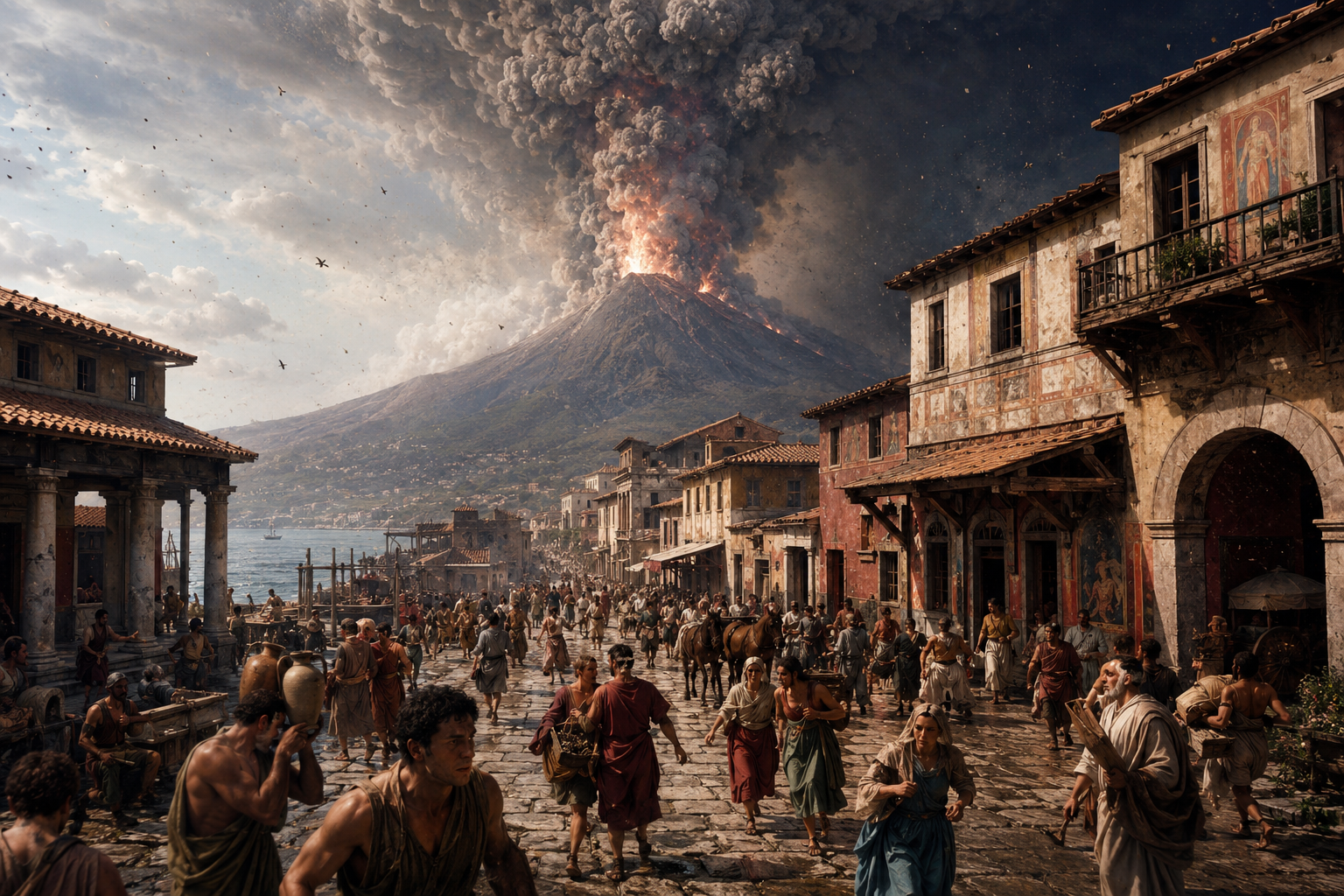
In the Shadow of the Volcano
Everyone has heard of Pompeii, the Roman town engulfed after the eruption of Mount Vesuvius. It’s one of the most visited sites in Italy (to the extent that the tourist authorities now limit the number of people allowed on the site at a time). But a few stops back along the line towards Naples is the other town destroyed by the Vesuvius cataclysm, Herculaneum.
Smaller, quieter and remarkably well preserved, Herculaneum offers an intimate glimpse into everyday Roman life. While Pompeii tells the story of a bustling city, Herculaneum feels like stepping directly into someone’s home.

Travel back in time
Arriving at the archaeological site, it’s easy to forget that modern Italy surrounds you. Beyond the entrance, ancient stone streets descend towards what was once a prosperous seaside town. Wealthy Romans built elegant villas here to escape the heat of Naples, enjoying sea breezes and spectacular views of Mount Vesuvius—never imagining that the volcano would one day destroy their world.
Unlike Pompeii, which was buried under layers of volcanic ash, Herculaneum was engulfed by superheated volcanic mud and debris. This tragic event created an extraordinary time capsule. Wooden doors, roof beams, furniture, and even food have survived for nearly 2,000 years, preserved in astonishing detail.

One of the highlights of any visit is the House of the Deer, named after its exquisite garden sculptures. Wandering through its rooms, you can still see intricate mosaics, painted walls and the remains of an opulent courtyard. Nearby, the House of Neptune and Amphitrite contains some of the finest mosaics in the Roman world, their colours still vivid after centuries beneath the earth. I think this is one of the things that struck us – if you squint your eyes a little, it’s almost as if the occupants have just stepped away a short while ago, rather than two millennia ago.

Perhaps the most haunting part of Herculaneum lies near the ancient shoreline. There, in the 1980s, archaeologists discovered a line of boat bouses which at the time would have been on the shoreline, where the residents of Herculaneum had fled, hoping to board boats to escape out to sea.

The archaeologists discovered hundreds of skeletons in the boat houses where residents had been overtaken by the superheated mud amd debris from the volcano. I have to admit, it brought us up short – a sobering reminder that behind the archaeological treasures are the stories of real people—families, merchants, slaves and children whose lives ended in a single catastrophic day. We weren’t expecting it (iunfortunately the day we visited the site had run out of English language guidebooks and we were having to use a French one… so we were a little unprepared!)

Yet Herculaneum is not a place of sadness alone. There is something profoundly human about it. You can peer into kitchens and imagine meals being prepared, examine public baths where neighbours once gathered, and follow the grooves left by cart wheels on the stone streets. The details bring the ancient world vividly to life.
The site is compact enough to explore at a leisurely pace, and the changing light throughout the day creates dramatic contrasts between sunlit courtyards and shaded interiors. Early morning visits are particularly rewarding, offering cooler temperatures and fewer crowds. On the day we visited, mid afternoon, we were the only people there, adding to the sense of stepping back in time.
In many ways, Herculaneum feels more personal than Pompeii. Its smaller scale allows you to absorb the atmosphere without feeling overwhelmed. There are moments when, standing alone in a Roman courtyard or tracing your fingers across ancient brickwork, the centuries seem to disappear entirely. It is not merely a collection of ruins; it is a reminder that the hopes, routines and ambitions of people living two millennia ago were not so different from our own.

How to Get There
By Train – cheaper version: Herculaneum is easily reached from Naples on the Circumvesuviana train, with the Ercolano Scavi station just a short walk down the Via IV Novembre to the entrance. It takes abuut 15-20 minutes and only costs €2–€3 each way. The train leaves from the lower level of Naples Central station, and you can buy tickets at the station or use a contactless credit card at the gates.
By Train – traveling in style. The Campania Express runs on the same tracks as the Circumvesuviana train, but offers air-conditioned, assigned seating, fewer stops, and it’s less crowded. It costs a bit more – around €15 for a round trip – but we can tell you from experience, the Circuvesuviana train is crowded, hot and sticky, and you’ll be lucky to get a seat. The Campania Express is a tourist train and only runs in the peak toursit season.
When you arrive by train, walk straight downhill, down Via IV Novembre for about 8–10 minutes (approx. 500 meters) until you reach the main entrance of the archaeological site. Yes it’s uphill on the way back, but we stopped for a pleasant glass of wine in one of the local cafes on the way back (after seeing the skeletons, we needed it!)
Bu Taxi: Naples taxis have official predefined flat tariffs (tariffa predeterminata) for trips to Herculaneum (approx. €70–€80 round-trip, which often includes up to 2 hours of waiting time). Make sure to request the predetermined rate before starting the ride. Journey time depends on the sometimes gridlocked Naples traffic, but usually takes 15-20 minutes.
Related Post
The Garden on the Ramparts
Most visitors to Prague's famous and beautiful castle enjoy the historic building and its links…