
A shopping experience you won’t forget
Undiscovered Places >> Europe>> A shopping experience you won’t forget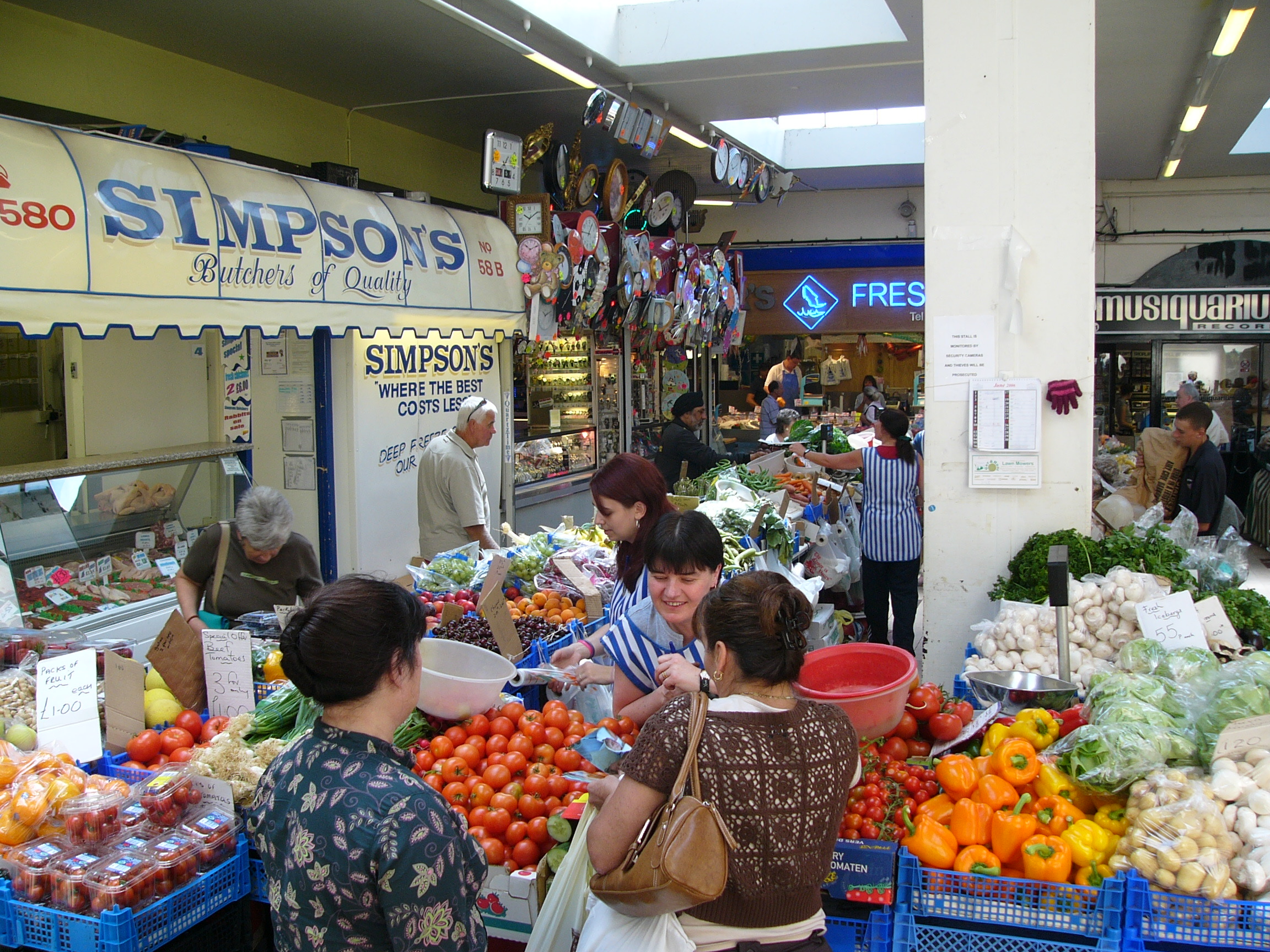
A shopping experience you won’t forget
You probably wouldn’t think about visiting a local market. But Swansea Indoor Market is not your average, common or garden market and offers some unique experiences. It has been voted Britain’s best indoor market, and is the largest indoor market in Wales. To be fair, most people probably wouldn’t think about visiting a market in a Welsh city when you have the magnificent Welsh countryside not too far away.

But if you want to get a handle on real life in South Wales, what better place than to go to the place where locals go.
History
There has been a covered market in Swansea since 1652, when it was situated near Swansea castle. The first dedicated market building was built in 1774 – though the word building is something of an overstatement as it was simply a roof, held up by pillars but with no walls. A new red brick building was put up just over a hundred years later, in June 1897.
Unfortunately, this building was targeted by the Luftwaffe in 1941 and the roof and interior of the building were destroyed. It took 20 years before a new market building was put up., in 1961.
Market Legends
The 1652 market was a simple roof supported by ten pillars. Local tradition says that the lead used for its roof came from St David’s Cathedral, supposedly supplied by Oliver Cromwell. There’s a delicious twist: it subsequently emerged that Philip Jones, one of Cromwell’s prominent local supporters, had actually been indicted for stealing lead from the cathedral roof! The market’s own history cautiously says it isn’t known whether Cromwell actually supplied the lead, although he did refer to Swansea’s market house in a 1655 charter. A true story? No-one knows, but it’s fun to speculate.
Perhaps the most distinctive Swansea market story is the cockle trade. For generations, women from the villages around the Burry Inlet and Gower gathered cockles from the estuary and brought them into Swansea to sell. The women, often known locally as cockle women, became one of the defining characters of Swansea Market. They would walk considerable distances, often carrying heavy baskets of cockles, and the trade became a vital source of income for generations of families. The cockle industry is still regarded by the market as one of the defining threads of its history.
Shopping
Inside the modern market, you’ll find everything you would expect – fruit and vegetables, fishmongers, clothes stalls and butchers. There is a pride in traditional methods and among the kind of things you might expect in any market in Britain you’ll find things that are uniquely Welsh.

You’ll see stalls like this one – but sadly, since this photo was taken, the Hugh Phillips butchery business had to close down in 2024, after nearly 150 years. The owners – members of the same family that set up the business in 1887 – told local media “the running of the abattoir was getting increasingly difficult with the energy costs, rates, insurances, increased minimum wages and this closed last year… With the stress on our lives with the current farming crisis and constant increased costs involved we see no light at the end of the tunnel.” A sad end to an iconic piece of Swansea market.
But there are still butchers at the market, and you would still be able to buy some tasty Welsh lamb.
There are several bakery stalls selling local delicacies like Welsh cakes, or bara brith, a kind of fruit cake made with tea. Another local delicacy is bara blanc, a kind of crumpet which, according to some, dates back to Anglo-Saxon times. But there is one thing that you will only find in South Wales, and where better to find it that in Swansea Market.

We’re talking about Laverbread, made from laver, an edible seaweed consumed mainly in Wales as part of local traditional cuisine. The seaweed is commonly found around the west coast of Great Britain, and the coasts of Ireland. It’s been cultivated as a food in Wales since at least the 17th century and is prepared by being washed over and over again, and then boiled until it softens into a green puree. Though some might call it a green sludge. But that’s not how most people eat it (though you can if you’re brave). Sometimes it’s rolled in oatmeal and fried, and served with bacon and cockles – a kind of shellfish – as a traditional Welsh breakfast. Laverbread is highly nutritious because of its high proportions of protein, iron, and especially iodine.
The Dylan. Thomas connection
Elsewhere on this site is an article about the home of Dylan Thomas, and there’s another reason Swansea Market is interesting. Thomas grew up in Swansea and described it memorably as an “ugly, lovely town.” His memories of Swansea were central to his writing, and he repeatedly drew upon its streets, people and atmosphere. While we couldn’t claim that he wrote specifically about Swansea Market without stronger evidence, the market belongs to exactly the kind of working-class, noisy, intensely local Swansea world that surrounded Thomas during his childhood.
if you’re exploring Swansea because of Dylan Thomas, it’s worth putting the market on the itinerary. The market, the old Kardomah cafés, Castle Street, Wind Street and the waterfront together give you a much better sense of the “ugly, lovely town” that Thomas knew than the more polished tourist attractions do.
Getting there
You can find out more about what’s on offer at the market, here. It’s open Monday to Saturday, 8am to 5pm.
The market is in the heart of the City Centre and there are maps of the market layout at each of the entrances. Swansea Market is only about a 10–15 minute walk from Swansea railway station, making the train probably the simplest option if you’re coming from elsewhere in Wales or England. It’s only just over a kilometre.
Swansea Bus Station is immediately beside the Quadrant Shopping Centre and only a few minutes walk. It’s the main hub for local services. Local services from the bus station cover the city, Mumbles, Gower, Neath, Port Talbot and surrounding areas.
Related Post
Ticket to Rye – the medieval jewel on the Sussex coast
England's south coast used to be a popular holiday destination for Brits before the advent…