Hidden Changi, Singapore
Undiscovered Places >> Asia>>Singapore>> Hidden Changi, Singapore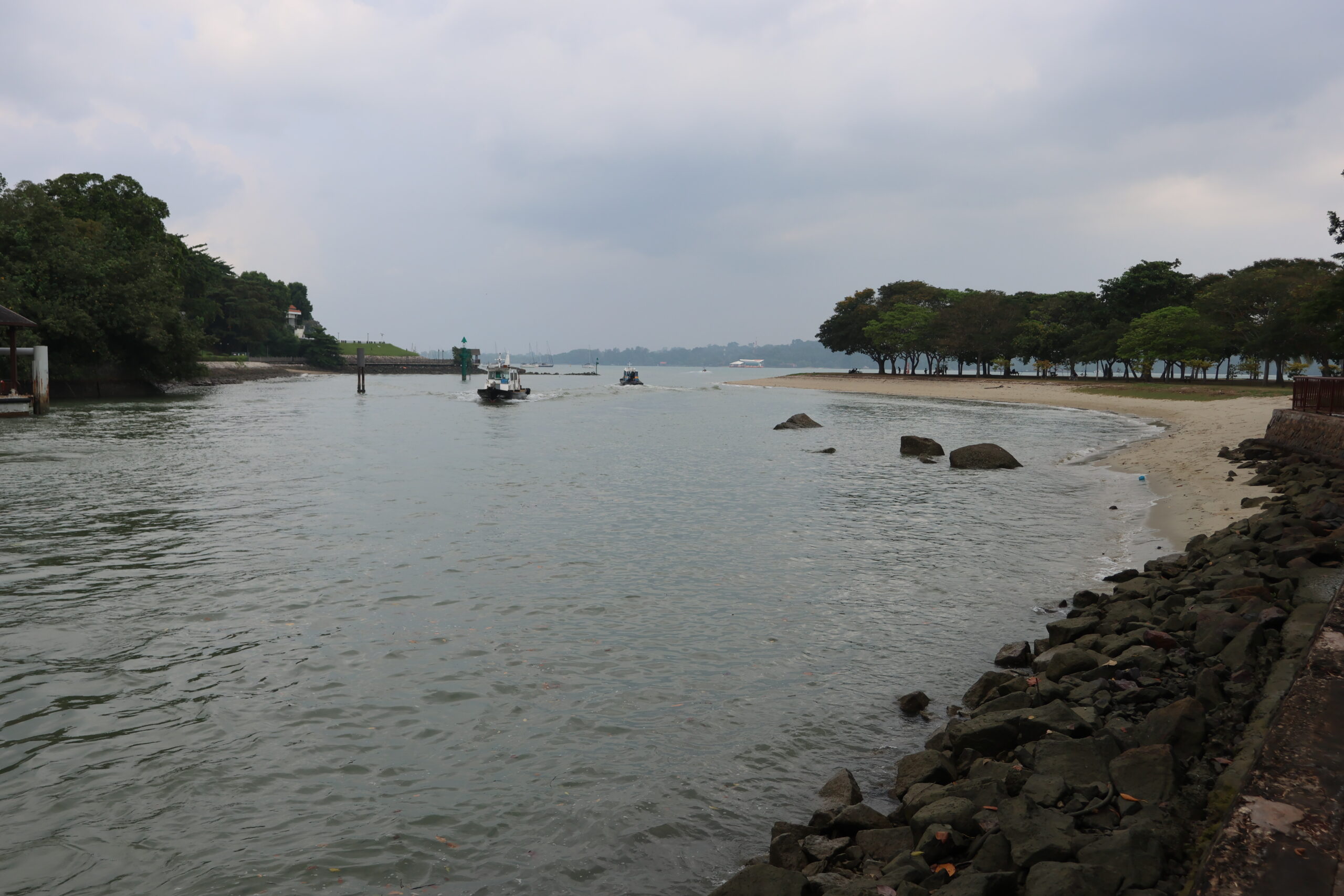
Hidden Changi, Singapore
Everyone has heard of Changi, in Singapore. Millions of people have been there. But not really. Changi is the site of Singapore’s airport, a massive, four terminal cathedral of a place. Roughly 200,000 people pass through the airport every single day – but just a few kilometres away is the real Changi, a little corner of Singapore with a unique charm that’s well worth a visit.
We actually stayed in a hotel in Changi – the Village Hotel – and if you don’t want to stay in the busy high rise hub of the city centre, it’s not a bad alternative. It’s a 25 minute journey by Grab rideshare or Taxi into the city centre, but a much more peaceful place to stay. This gave us the perfect base to explore Changi.

Food and Drink
There is no shortage of different types of cuisine in. the village. There’s everything from traditional local food to an Irish Bar, from Chinese to Indian restaurants, from barbecues to hotel luxury. But check out the Changi Village Hawker centre, where you can make your choice from famous local dishes, especially traditional nasi lemak, roast meat rice, and fried carrot cake. And a reminder of Britain’s legacy of an extensive civil service – just nearby is the Civil Service Club. You don’t have to be a Civil Servant to take advantage if the facilities, you can become an Associate member.
A Unique Place to Stay
Walk through the Hawker Centre to Changi Point. Along the way you’ll see a uniquely Singaporean place to stay – the Bus Collective.

It’s the first hotel in Southeast Asia to be built using repurposed public buses, having been constructed using twenty decommissioned buses formerly operated by the local bus operator. It opened in November 2023 and started accepting guests on 1 December – and you can book into it via sites like Booking.com or direct at https://www.thebuscollective.com/. Some of the buses are particularly luxurious (with prices to match). And no, you can’t use Singapore’s EZ-Link travel cards for the public transport network to pay for your stay.
Peace and Quiet

You’ll see a small pedestrian bridge once you’re past the Bus Collective leading to what looks like parkland. It is oarkland, but this is Changi Point. If you look to your left as you cross the bridge you can see on one side of the water a sandy beach, and on the other a collection of ferries, plying their trade across to the island of Pulau Ubin, popular with locals and a chance to glimpse Singapore as it was in the past. (Don’t ask what time the ferries go – they go when there are enough people to make the trip worthwhile!).

Walk to the other side of the point and turn right along the winding path that follows the coastline, It’s pleasant and shady on a hot day Ahead of you you’ll see reminders of modern Singapore – the flight path into Singapore’s airport crosses the path and it’s a great spot for plane spotting as the runway is only a few hundred metres away.]
A dark past
Peaceful though it now is, Changi’s relatively recent history has some dark overtones. It was in Changi that the Japanese set up one of their most infamus Prisoner of War camps during the Second World War. And it Changi Point was one of the places that the Sook Ching massacre took place, and there is a small memorial plaque visible beside the path (below). This was a systematic purge and massacre of ‘anti-Japanese’ elements in Singapore, with the Singaporean Chinese particularly targeted by the Japanese army during the occupation. However, Japanese soldiers engaged in indiscriminate killing and did not try to identify who was ‘anti-Japanese.’ The operation was overseen by the Imperial Japanese Army’s Kempeitai, its secret police and took place just three days after Singapore fell to Japan following the defeat of the allied army.

After the war, the Japanese authorities acknowledged that the massacre took place, but disagreed about the number of deaths that Japan had caused. Japan claimed there were no more than 6,000 deaths, but Singapore’s first prime minister Lee Kuan Yew, who narrowly escaped being a victim of the massacre himself, reckoned that it was more like 70,000 over the several sites.
A living sea wall
A bit further along, you’ll see what looks like small concrete pools on the sea wall. This is a self-sealing, adaptive sea wall design built to handle rising sea levels while actively supporting local marine biodiversity at the same time, Each little pool is designed to favour a different kind of local sea life, The idea is that the wall itself can be adapted as sea levels rise due to global warming. The precast concrete elements are engineered to be modular, meaning the infrastructure can be built up or extended incrementally.

It may not look it, but it’s pretty high-tech: Embedded self-healing mechanisms automatically seal micro-cracks in the concrete, while integrated smart sensors track structural performance, reduce maintenance cycles, and lower long-term repair costs. And local people have reported on social media that corals have settled naturally on the long seawall, and on the shallow berm, it seems even seagrasses have flourished with what seems to be a dugong feeding trail. An astonishing variety of marine life has settled here from colourful slugs to fishes, crabs and echinoderms.
Getting there
If you’re not already staying there, it is not the easiest place to get to by local transport. The nearest metro station is Tanah Merah, and then you have to get a bus to Changi itself. Using ride share or a taxi is the easiest and the quickest (we found a public transport journey took more than 90 minutes to get to the city centre. A Grab ride share took just 25 minutes). But it’s well worth stepping away from the high-rises of Singapore’s CBD to discover another side to this unique city-state.
Related Post
A Colourful Underground Adventure
If you’ve ever seen photos of Yangshuo, China, you’ve undoubtedly seen the iconic, mist-shrouded karst…